
Seven days, three cities, and two countries
In which I write about the last week of my life.

Selected Works is a weekly (usually) newsletter by the Te Whanganui-a-Tara, Aotearoa (Wellington, New Zealand) based freelance music journalist, broadcaster, copywriter and sometimes DJ Martyn Pepperell, aka Yours Truly. Most weeks, Selected Works consists of a recap of what I’ve been doing lately, along with some of what I’ve been listening to and reading, paired with film photographs I’ve taken, plus some bonuses. All of that said, sometimes, it takes completely different forms.
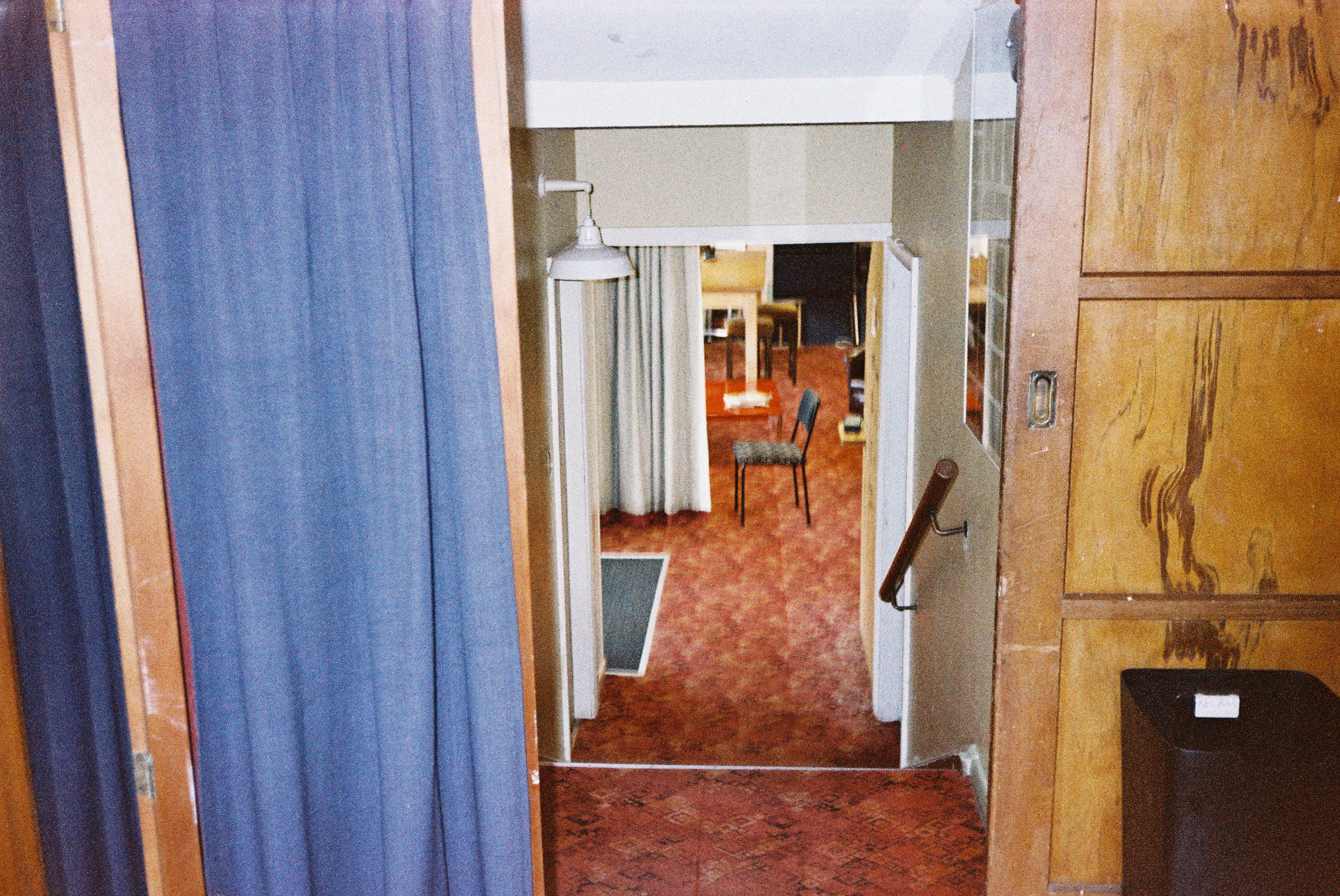
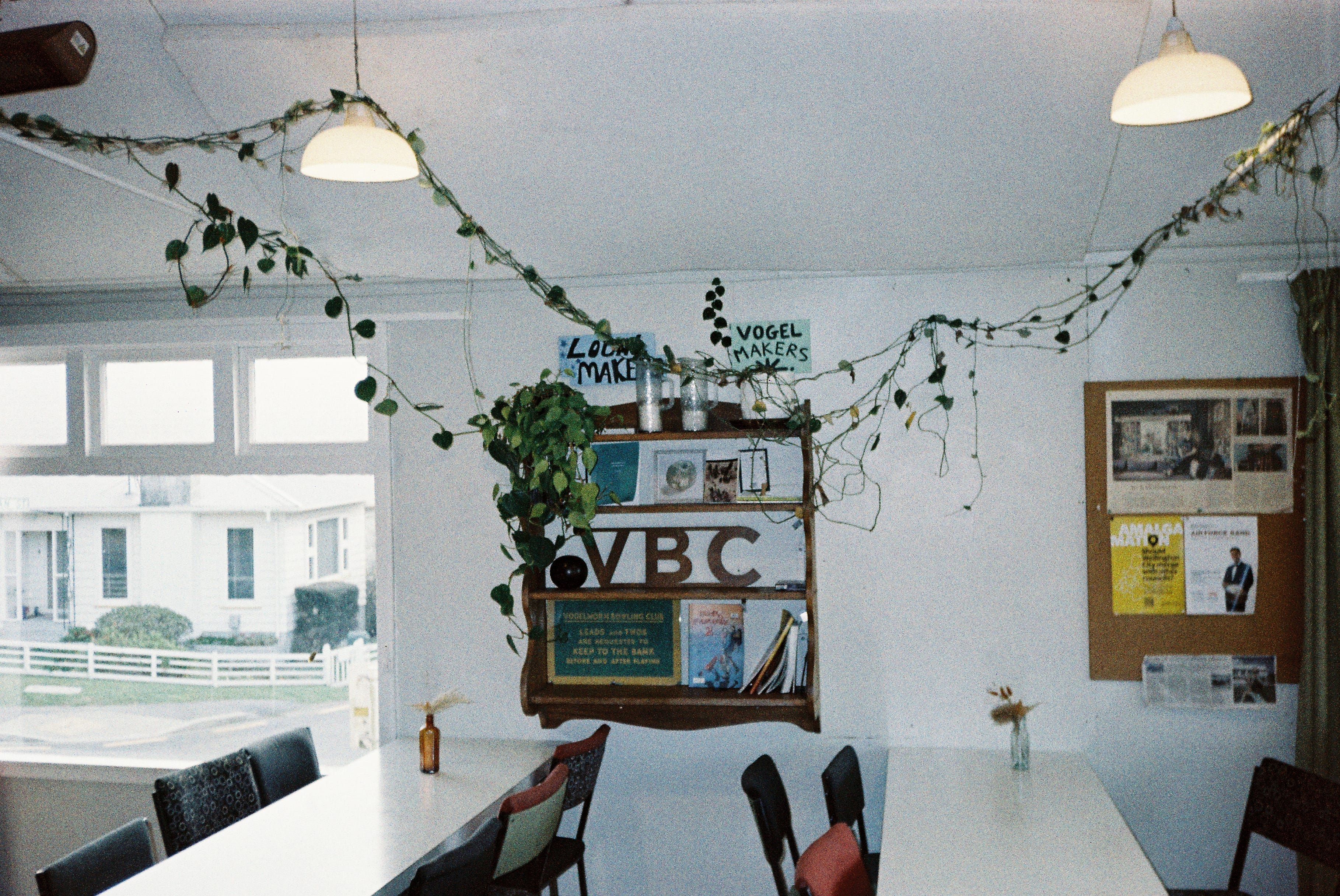
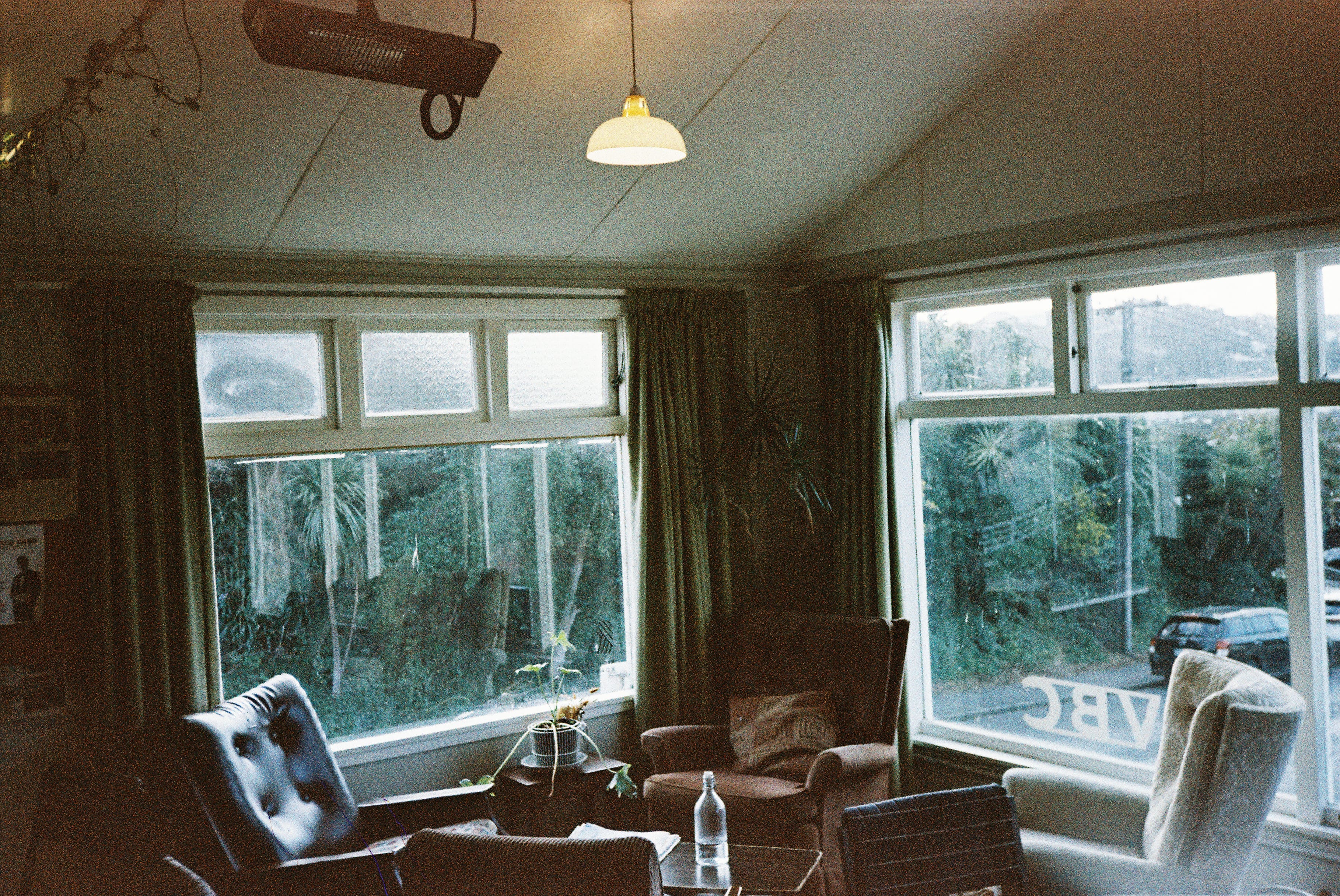
Today’s newsletter is a personal essay. It’s also a loose recap of what I’ve been up to over the last week. It’s accompanied by some 35mm photos I shot inside Vogelmorn Bowling Club recently.
18.07.2026
It’s Saturday afternoon, and we’re a day into running Ghost Media’s Pōneke Promotion Crash Course in the upstairs section of Vogelmorn Bowling Club in Wellington. Earlier in the year, I ran into Ghost Media’s founder, Young Ghost, on Cuba Street. He’s been putting hip-hop, jungle and dubstep parties on for about a decade and had been wondering how he could share what he’d learned with the next generation.
We planned a course on the basics of event promotion, applied for some funding, miraculously got the funding, and got to work. Several months later, we were able to host about twenty-five students for two days of lectures, discussions and planning. For me, the whole thing felt like a small miracle. I look around the room, and I see an engaged group of people who’re all confident enough to talk and ask questions in public. It wasn’t that long ago that getting this sort of audience engagement at a “music industry seminar” in New Zealand felt like pulling teeth.
In the late 2000s, the filmmaker Taika Waititi wrote and directed a low-budget romantic comedy called Eagle vs Shark (2007). Sometimes I jokingly describe it as one of the most awkward films I’ve ever seen. In reality, that awkwardness wasn’t just present on screen. It could often still be felt in social life down here. Don’t get me wrong, a bit of that “awww shucks” quality still lingers, but these days, whenever I do work that involves group settings and collective discussions, I don’t see much of it.
Have you ever heard of Tall Poppy Syndrome? Some of you will have rolled your eyes while you read that question, but not everyone who reads this newsletter is a New Zealander or lives in New Zealand. It’s the idea that we have a cultural disposition down here towards mocking, criticising, or cutting down people who stand out, achieve success, or show high ambition. It’s one of those things that can feel simultaneously real and imaginary.
Eleven years ago, I helped produce the reissue of a 1980s West African country & folk album called Our Garden Needs Its Flowers for Brian Shimkovitz’s Awesome Tapes From Africa label. The album’s Ivorian creators, Jess Sah Bi & Peter One, met in Abidjan in the early eighties and found common ground over the melodies, harmonies and sentiments of mid-to-late twentieth-century British and American music. After adding in their own cultural twists, they ended up selling out stadiums throughout Benin, Burkina Faso, Côte d’Ivoire, and Togo.
I interviewed Jess and Peter for the reissue and wrote liner notes that were later printed inside the LP’s gatefold cover alongside archival photographs. While we were talking, I realised that they’d called the album Our Garden Needs Its Flowers to push back against a version of Tall Poppy Syndrome they’d contended with while they were building their reputation as musicians. Some New Zealanders like to imagine that Tall Poppy Syndrome is specific to New Zealand, but it isn’t. In Japan, they say, “The nail that sticks up gets hammered down.” Scandinavians talk about the Law of Jante. The list goes on.
While we were on a lunch break, the students, lecturers and staff all headed downstairs to the Vogelmorn Bowling Club cafe for toasted sandwiches and coffee. When I looked around the room again, everyone was talking, laughing and smiling. No nails were being hammered down. Maybe things are changing.
22.07.2026
I’m in Melbourne now. I arrived yesterday on an early morning flight. Two hours after I landed, I met up with a music journalist disguised as an Instagram influencer for coffee. It’s rare that someone can outtalk me, but he did it. The punisher became the punished. While I was trying to keep up with him, I was hit by a blinding headache and a wave of nausea. It wasn’t his fault, so I kept it under wraps.
Later that day, I found myself vomiting in a hotel bathroom. Afterwards, I lay in the cool darkness trying to work out what was going on. When I checked my emails on my phone, I had a crisis of confidence. I felt utterly wrecked, but there was still so much I needed to get done before the end of the day. Maybe I’d been overly ambitious. Maybe I was getting too old for freelancing and travelling at the same time. It was a bad scene.
I knocked back some Panadols, pulled myself out of bed, and logged onto Zoom to spend the next hour and a half interviewing Che Fu. If you already knew what Tall Poppy Syndrome was before you read this newsletter, I’m pretty sure you know who Che Fu is. If you don’t, he was one of New Zealand’s most celebrated and commercially successful hip-hop, R&B and reggae artists in the late ‘90s and early 2000s.
These days, he keeps a lower profile, but New Zealanders from all walks of life still revere him. It’s been twenty-five years since he released his second album, Navigator. It’s one of those records that, culturally speaking, hit the country like a tsunami. In October, he’ll be touring the country to celebrate the anniversary. You’ll be able to read more about all of this when Rolling Stone publishes my interview with him.
Afterwards, I went out for dinner and a couple of drinks with one of the many New Zealanders who live in Melbourne: Cory Champion. You might know him for the jazz he composes as Clear Path Ensemble, the techno he produces and DJs as Borrowed CS, or his latest (and arguably flashest) role, drumming for Fat Freddy’s Drop. I’m not going to explain who Fat Freddy’s Drop are. By the time we’d finished catching up, I felt a lot better. I think sleep will come easily tonight.
23.07.2026
In November 1981, the New Zealand pianist Mike Nock headed into Talent Studio in Oslo. There, he recorded Ondas, a cult classic of ambient jazz that ECM released a year later. By then, Mike already had serious credentials, having made significant creative contributions to new jazz with his US group The Fourth Way in the late 1960s.
Ondas found him leading an acoustic piano trio with the adroit bassist Eddie Gomez and the free-thinking drummer Jon Christensen. Mike’s open compositions left plenty of space for each of them to shine. Eddie’s elastic bass is often a second lead voice in these pieces, and Jon’s pulses are felt as a succession of waves.
It’s the sort of music that makes me nostalgic for the past and excited about the future in equal measure. I want to say that listening to it feels like standing on a beach in the Antipodes and staring out into the ocean, but that’s also literally what the cover looks like. Ondas is good enough for me. It’s also good enough for my friend Michael Kucyk, whose taste is far more refined than mine. So much so that he bravely booked Mike to perform the album live at The Edge in Melbourne’s Fed Square as part of the tenth anniversary celebrations for his record label, Efficient Space.
After Michael sent me the flyer, I went straight online and booked flights and accommodation. There was no way I was going to miss this. You might wonder why I’m being so intense about this. Let me explain: Mike Nock is 85 years old.
When I saw Mike seated at the piano tonight, he looked 85 years old. However, once he started playing, he could have been 65, 45, or even 25. Flanked by Laurence Pike (drums) and Ben Waples (double bass), Mike and his trio revealed themselves as masters at work. From the sprawling opus ‘Forgotten Love’ to ‘Doors’, by way of the magnificent title track and the pieces that surround it, Ondas unfolded like a dream come to life. I had plenty of thoughts while he was playing, but some of them need to remain private. Like David Bowie, I can’t give everything away.
Looking around the theatre room, I counted close to thirty different people I knew from different eras in my life. Old friends, casual acquaintances, new associates — they were all there. Something about that felt good. It makes sense. I’ve been coming to Melbourne for twenty-five years. On a long enough timeline, even unfamiliar places can eventually start to feel like home, or in my case, one of many homes. I can only begin to imagine how it all must have felt for Mike to revisit that music forty-four years on. I hope I get to experience something similar one day.
25.07.2026
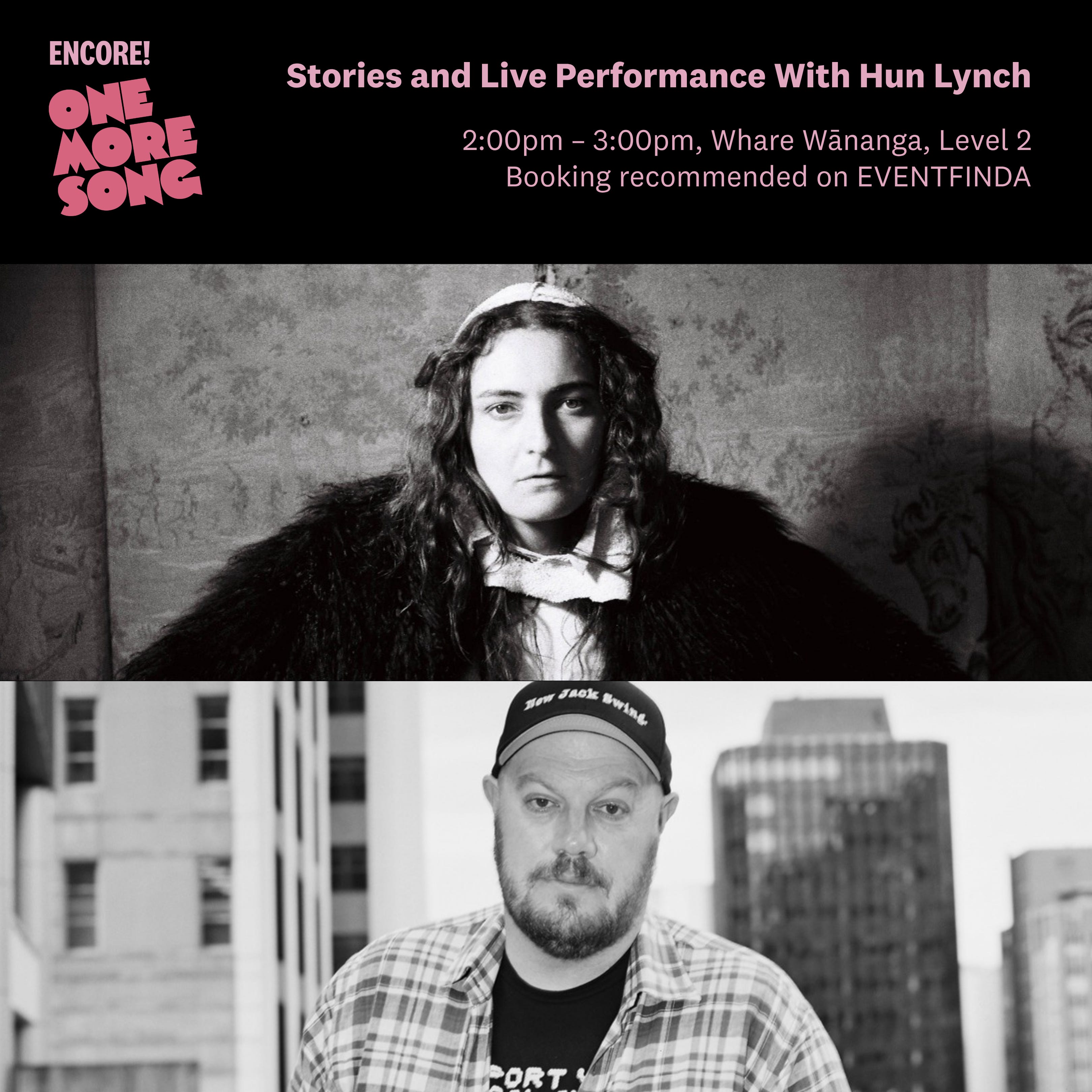
I’m seated on stage at Whare Wānanga on the second floor of Auckland’s central library. I know close to one hundred people are seated in front of me, but I can’t see any of them through the blinding lights bearing down on me. To my left, the musician, actor and general multi-hyphenate Hun Lynch is singing, playing guitar, and triggering backing tracks off her SP-404 sampler. She’s performing songs from her debut album, Sycophant, recently released by Noa Records. Much like the blinding lights, her sound envelops me. I’m here, but I’m also somewhere else, lost in the ether of her upside-down realm.
Something I love about Hun’s music is how many different versions of Auckland it reminds me of. When I listen to Sycophant, I feel like I’m drifting through a maze of over twenty-five years of memories of different venues, cafes, streets, house parties, late-night walks, films and scenes throughout New Zealand’s largest city. Stylistically, her songs sit somewhere between gritty, neo-noir folk, rock and psychedelia, and lush, naturalistic ambient, techno and jungle. They’re from everywhere and nowhere at the same time. In moments, I think she might be the ultimate Auckland artist.
Earlier in the year, I conducted a set of interviews for One More Song: Stories From The Stage, a zine Auckland Libraries published as part of Encore!, their ongoing free exhibition, which explores how live music has shaped central Auckland and the connections formed between musicians, reviewers and audiences across generations. Afterwards, they invited me to host a live performance and conversation with a musician at their Encore! One More Song event. Hun was at the top of my list. I’m very grateful she was keen to take part in this with me.
I’m going to level with you, there are a lot of things about this that I find anxiety-inducing. Just the act of taking to an audience from a stage is challenging for me. If you’ve seen me give a talk, or host an event, you might not guess that, but after fifteen years of doing this sort of thing, I still get a bit of stage fright beforehand. The thing about anxiety, though, is you don’t have to think of it as part of you. You can see it as a weather system you’re moving through. Like the rain, it eventually passes.
I also find the promotional side of these sorts of things stressful. Quite frankly, I can’t say I enjoy much about posting work online anymore. Often, it’s met with what can feel like silence or apathy. This sort of response can lead to a lot of self-doubt. Then there is the opposite problem, when too many people respond to what you’ve posted, sometimes in bad faith, sometimes not. That’s just part of it though. You have to develop thick skin when you’re presenting work for the public eye. It’s one thing to make something, but it’s a whole other thing to share it. Humans are feeling machines. We can be irrational at the best of times.
Halfway through the performance and conversation, I realise we’re doing okay. Hun’s music sounds amazing, we’re discussing some decent topics, and the room is mostly full. I realise there were just enough people I knew in the room, and more than enough I’d never met. Some of them knew who we are. Some of them didn’t. Regardless, they stayed with us for the duration. A few of them even asked us to pose with them for photos at the end.
Later that night, I headed down the road to watch my friend and sometimes client Jessica Bailey aka Fables open for Dave Dobbyn at The Civic Theatre. If you know what Tall Poppy Syndrome is, you definitely know who Dave Dobbyn is. If not, that’s another story for another time. Funnily enough, the subtitle of that show was Selected Songs Encore. There’s something to be said about moving from one encore to another after spending seven days in three cities and two countries. Rather than trying to tie everything together with a neater metaphor, however, I’m going to leave it at that.
Life is messy, beautiful and often completely lacking in structure or resolution. If we’re lucky, we live in interesting times in our waking hours and dreams. If we’re unlucky, we live in interesting times as well. So it goes.
FIN.
An exhausting week but an energising read! Ka pai, ka mihi.
Big week!